
This draft upgrades the existing post at https://www.michaelhua.com/ridesharing-accident/ ("Ridesharing Accident," published 27 Sep 2024).
Quick Answer
If you are hurt in an Uber or Lyft accident in Nevada, who pays depends on what the driver was doing when the crash happened. If the driver had accepted a ride or had you in the car, the rideshare company's insurance covers the claim. Nevada law (NRS 690B.470) requires at least $1.5 million in coverage for that period. If the driver was only logged in and waiting for a ride, lower limits apply: $50,000 per person, $100,000 per crash, and $25,000 for property damage. If you were a passenger, the company's policy almost always covers your injuries. Call (702) 852-2228 for a free consultation to learn which policy applies to your case.
Who Pays Depends on the Driver's App Status
Nevada treats rideshare crashes in three periods. The period decides which insurance policy pays.
Period 1: App on, no ride accepted. The driver is logged in and waiting for a request. Nevada law requires coverage of at least $50,000 per person, $100,000 per crash, and $25,000 for property damage. The driver's own policy often excludes rideshare driving, so this can get complicated.
Period 2: Ride accepted, on the way to pick you up. The moment the driver accepts your request, the big policy turns on. Nevada law requires at least $1.5 million in coverage for this period.
Period 3: You are in the car. Same as Period 2. At least $1.5 million in coverage applies.
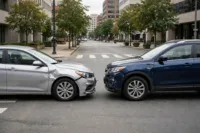
A short real-world example: a visitor takes an Uber from the airport to a hotel on the Strip. Halfway there, the Uber driver runs a red light and crashes into another car. The passenger is in Period 3, so the rideshare company's $1.5 million policy covers the passenger's injuries.
What If You Were the Rideshare Passenger?
As a passenger, you did nothing wrong. You have strong rights. The rideshare company's policy covers your medical bills, lost wages, and pain and suffering up to the policy limits. You may also have a claim against another driver if they caused the crash. You should not have to fight this alone while you are hurt.
What If Another Driver Caused the Crash?
The at-fault driver's insurance pays first. Nevada is an at-fault state, which means the driver who caused the crash is responsible. If their policy is too small to cover your injuries, the rideshare company's underinsured motorist coverage can help fill the gap when the crash happened during Period 2 or 3.
Why Rideshare Claims Are Harder Than Normal Car Crash Claims
At first glance, a rideshare crash looks like any other car crash. It is not. Here is why:
- The driver's personal insurance may refuse to pay because the driver was working.
- The rideshare company may say the driver is an independent contractor, not an employee.
- There may be three or four insurance companies pointing fingers at each other.
- The company's lawyers handle these claims every day. You need someone who knows how to push back.
Steps to Protect Your Claim After a Rideshare Accident
1. Call 911 and get medical help right away. Some injuries show up hours later. 2. Take photos of the cars, the scene, and your injuries. 3. Get the names and phone numbers of witnesses. 4. Report the crash in the Uber or Lyft app. This creates a record. 5. Do not give a recorded statement to any insurance company before talking to a lawyer. 6. Keep every medical bill, receipt, and doctor's note. These records matter. 7. Call a lawyer as soon as you can. Nevada law gives you limited time to file.
What Compensation Can You Seek?
If the crash was not your fault, you may be able to recover money for:
- Medical bills, including future treatment
- Lost wages and lost earning ability
- Pain and suffering
- Scarring and disfigurement
- Loss of enjoyment of life
Every case is different. The amount depends on how serious your injuries are and which policy applies.
How Michael Hua Injury Law Can Help
We deal with the insurance companies so you can focus on getting better. We find out which period the crash falls into, which policy applies, and who is responsible. We handle the paperwork, the phone calls, and the negotiations. If the insurance company will not offer a fair amount, we are ready to take your case to court. You pay nothing unless we win. No win, no fee.
Related Reading
About the Author: admin