Nevada decides fault with a rule called modified comparative negligence, found at NRS 41.141. Here is what it means in plain English. You can still recover compensation even if you were partly at fault for the crash. You only lose your right to recover if your fault is greater than the other side's fault combined. And your compensation is reduced by your share of the fault. So a driver who is 30 percent at fault for $100,000 in damages still recovers $70,000.
The Rule in Plain English
Think of fault as a pie that adds up to 100 percent. The court or the insurance companies divide the pie between everyone involved. If your slice is smaller than the other side's slice combined, you can still recover. You are only barred if your fault is greater than everyone else's put together.
There Is No Flat 51 Percent Cutoff
People call it the "51 percent rule," but that name can mislead. It is not true that you must be under 51 percent at fault in every situation. The test compares your fault to the other side's combined fault.
- Against one other driver: 50/50 still lets you recover, because your fault is not greater than theirs.
- Against two drivers: if you are 40 percent at fault and the other two are 30 percent each, you still recover, because 40 is not greater than 60.
How It Reduces Your Compensation
Being partly at fault does not end your case. It shrinks it. Fault of 30 percent on $100,000 in damages means a $70,000 recovery. Fault of 20 percent on the same damages means $80,000. Every percentage point the insurer pushes onto you costs you real money.
How Insurance Companies Use This Rule
Adjusters know this rule well, and they use it. They may argue you were speeding, looking at your phone, or could have braked sooner. Every point of fault they pin on you reduces what they pay. You do not have to accept their version of the crash.
A Real-World Example
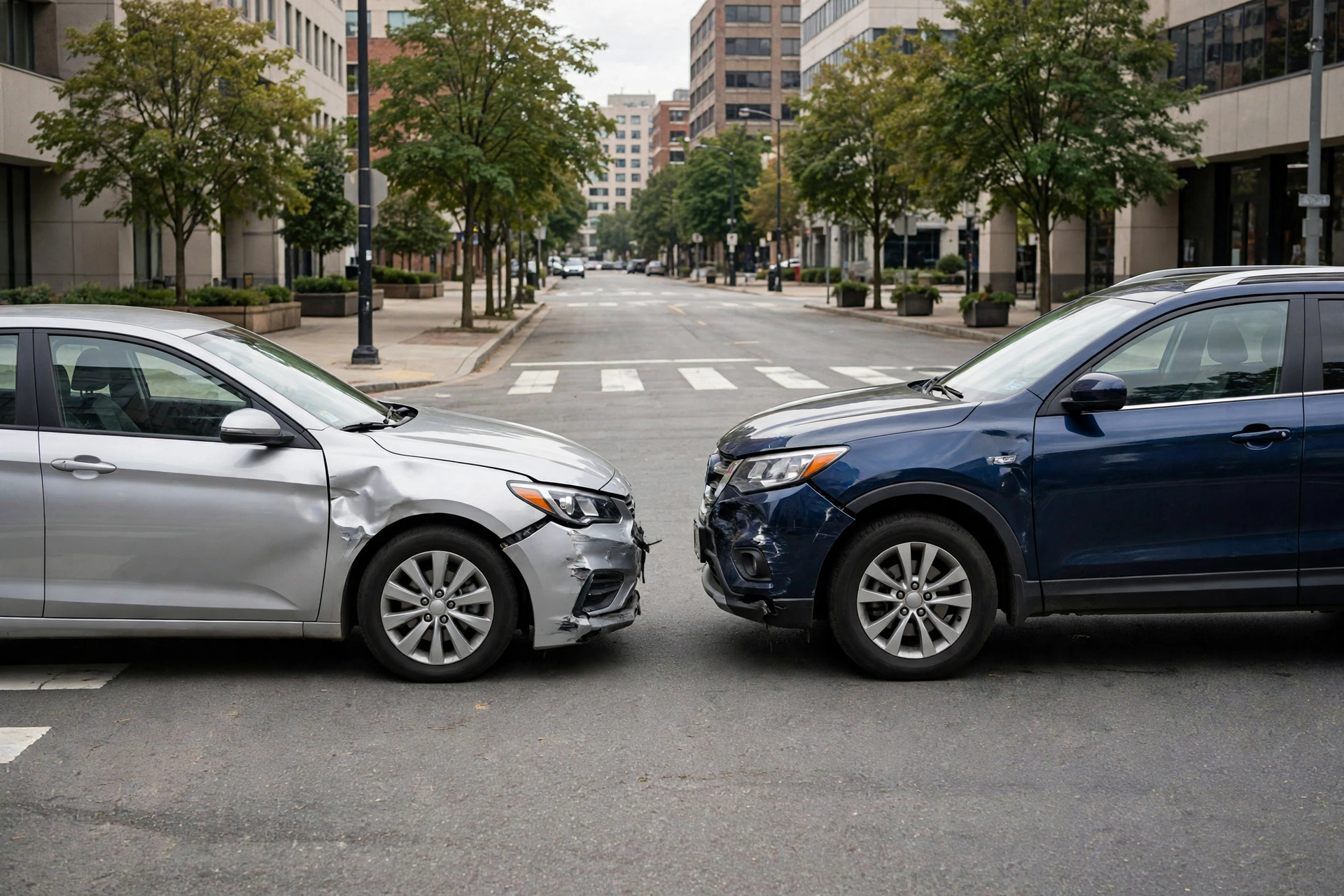
Two cars collide at an intersection on Flamingo Road. One driver ran a red light. The other was speeding. The red-light runner is found 70 percent at fault and the speeding driver 30 percent. The speeding driver had $100,000 in damages. Because 30 is not greater than 70, the driver still recovers, but the award is reduced by 30 percent, for a $70,000 recovery.
Fault in Multi-Vehicle Crashes
Chain-reaction crashes on the freeway can involve three, four, or more cars. Fault gets split among several drivers. The same rule applies: compare your share to everyone else's combined share. These cases are more complex, and early legal help matters.
What to Do After a Crash
1. Call the police and make sure a report is filed. 2. Take photos and video of the scene, the cars, and the road. 3. Get contact information from witnesses. 4. See a doctor, even if you feel fine. 5. Do not admit fault at the scene or to an adjuster.
Related Reading
About the Author: admin