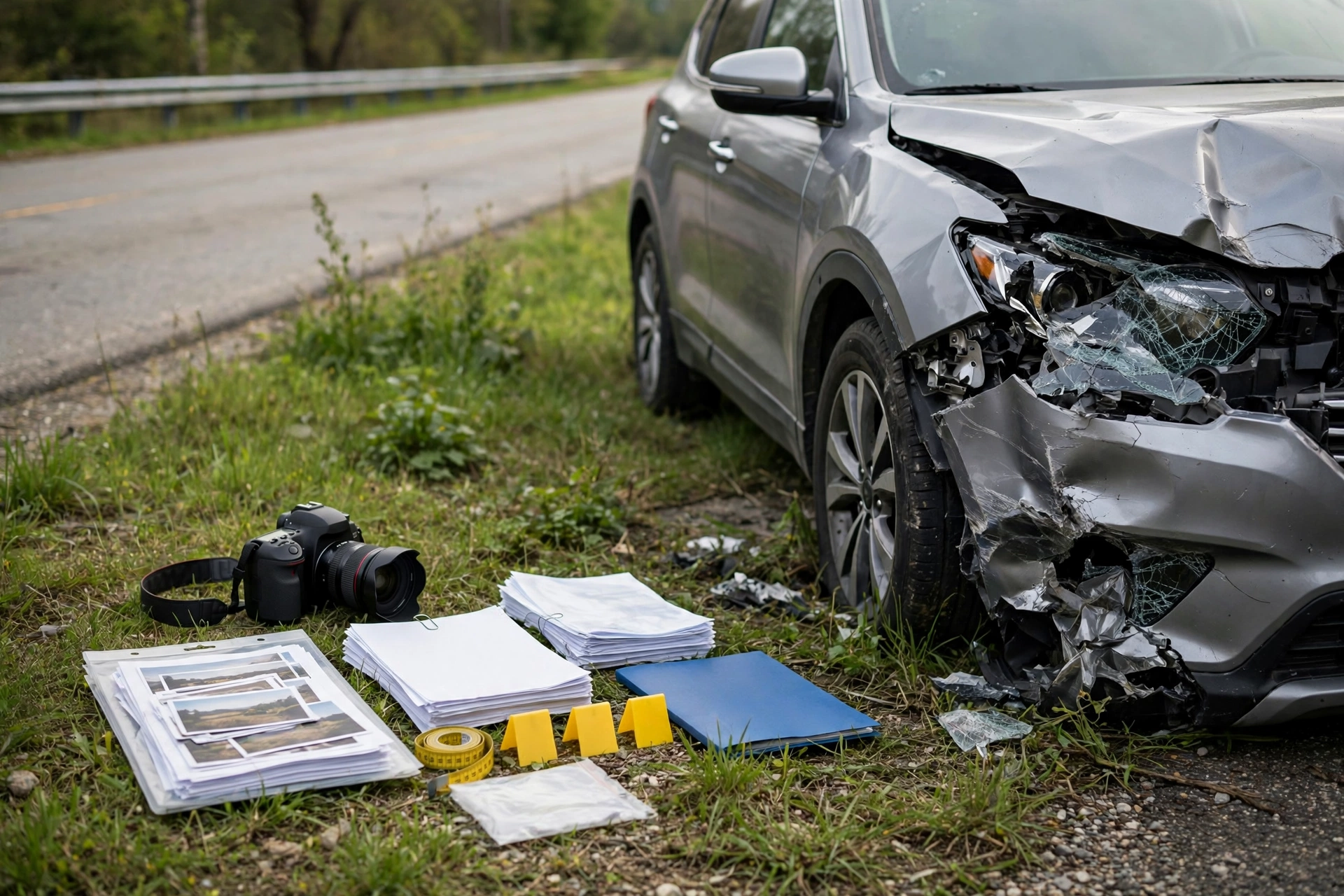
To win a personal injury case in Nevada, you need proof that shows someone else was at fault, that the accident caused your injuries, and that you suffered real losses. Photos alone do not win a case. The proof that actually matters includes your medical records, the police report, witness statements, wage records showing lost income, and documentation of how the injury affected your daily life. Strong cases are built on many pieces of proof working together.
Why Photos Alone Are Not Enough
Photos are useful. They show the scene, the damage, and your visible injuries. Take them whenever you can. But photos only show a moment. They do not prove who caused the crash, how badly you were hurt, or what the injury cost you.
Insurance companies see thousands of photos. What moves a case forward is proof that connects the accident to your injuries and your losses. That connection comes from records and statements, not pictures alone.
The Proof That Actually Matters
Medical records. These are the backbone of your case. Emergency room visits, doctor notes, imaging results, treatment plans, and prescriptions show exactly what you suffered and what care you needed. They also connect your injuries to the accident by date. See a doctor promptly and follow the treatment plan.
Police report. In a car crash, the police report records the facts: where and when it happened, who was involved, statements from drivers, and sometimes the officer's view of who was at fault. Insurance adjusters take this report seriously.
Witness statements. People who saw what happened can confirm your version of events. Get names and phone numbers at the scene, because witnesses are hard to find later. A short written or recorded statement from a witness carries real weight.
Wage records. If you missed work, you need proof of what you lost. Pay stubs, a letter from your employer, or tax records show your income before the injury and the time you missed. This turns lost wages from a claim into a number the insurer can verify.
Proof of daily impact. A simple journal of your pain, missed activities, and how the injury changed your routine helps show pain and suffering. Keep receipts for anything the injury forced you to pay for, like prescriptions, medical devices, or help around the house.
How Each Piece Supports Your Claim
Think of your claim as having three parts: fault, injury, and loss. Each type of proof supports one or more of these parts.
The police report and witness statements mainly support fault. They show what happened and who caused it. Medical records support injury. They prove you were hurt, how badly, and what treatment you needed. Wage records, receipts, and your journal support loss. They show what the injury cost you in money and in daily life.
When all three parts are backed by solid proof, the insurance company has little room to argue. When one part is missing, that is where they attack.
A Real-World Example
A man is hit by a driver who ran a red light on Charleston Boulevard. He takes photos of both cars, which helps. But what wins his case is the rest: the police report citing the other driver, ER records from that night, physical therapy notes over three months, a letter from his boss confirming six missed weeks of work, and a short statement from a pedestrian who saw the light change. Each piece does a job. Together, they leave the insurer with no real defense.
Related Reading
About the Author: admin